Se anmeldelser Read reviews

Ceviche, lemon butter and seaweed pesto: balancing acidity, richness and umami


Three flavour tools that bring the sea and green cooking together

Ceviche, lemon butter and seaweed pesto are three powerful tools in pescatarian cooking. This article explains how acidity, richness and umami can balance fish, seafood, vegetables and dairy.

At Kromans in Copenhagen, the subject matters because pescatarian food is not simply fish placed on a green plate. The task is to make marine flavour, freshness and substance work together.

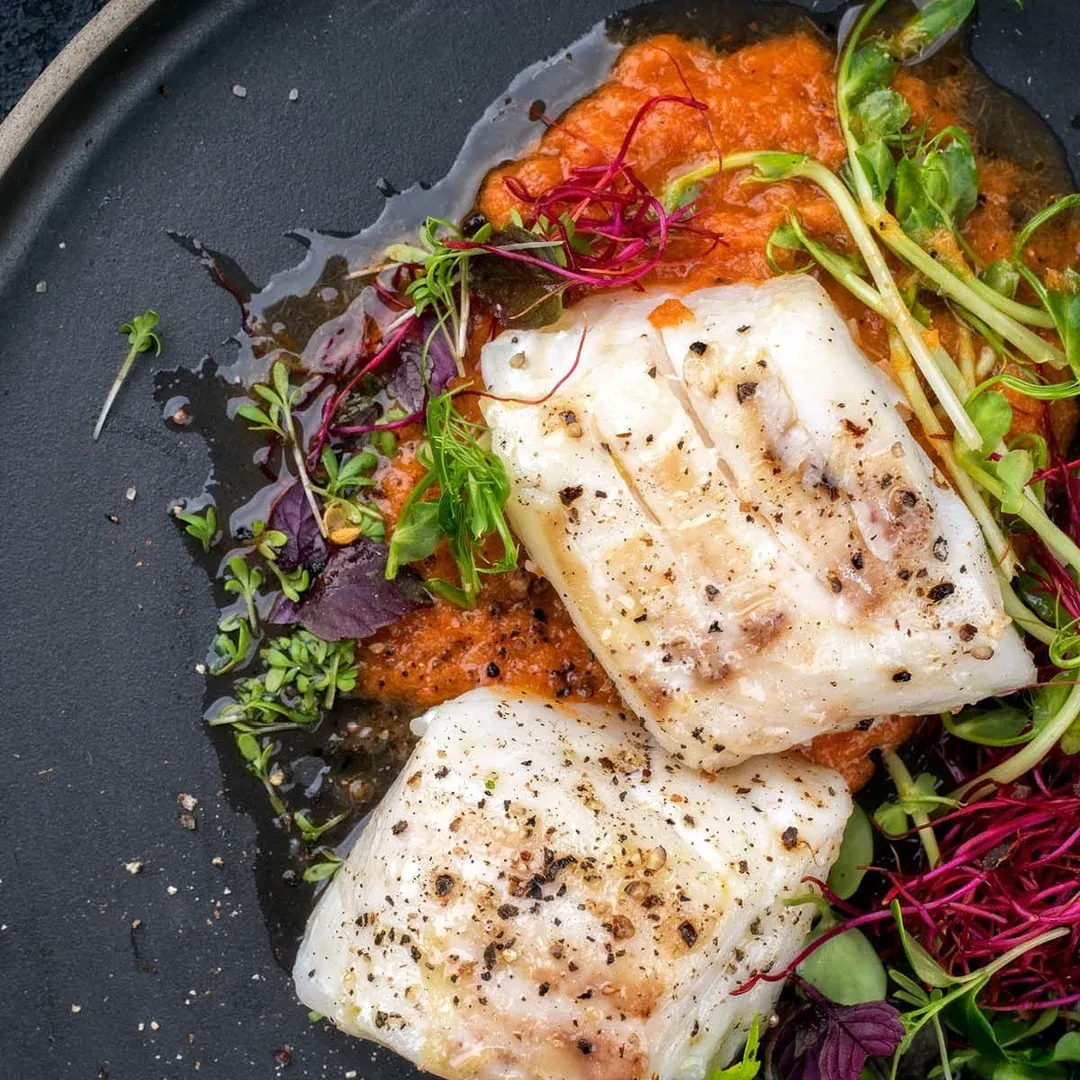
Two pan-seared white fish fillets seasoned with cracked pepper and herbs, resting on an orange sauce with microgreens and mixed greens on a dark plate.

Contents

What do ceviche, lemon butter and seaweed pesto each contribute?

Ceviche brings acidity and freshness. When fish or seafood meets citrus, salt and often chilli or fruit, the dish gains a clean, lively character. In a pescatarian menu, ceviche can provide fresh contrast to richness, dairy and firmer ingredients.

Lemon butter brings richness and acidity at the same time. Butter provides roundness, while lemon gives lift. It is a classic example of richness that need not become heavy when it receives enough freshness. Lemon butter works particularly well with a firm fish such as monkfish, which can carry the sauce without disappearing.

Seaweed pesto brings umami and marine depth. Seaweed can add salinity, minerality and a sense of the sea that connects fish, seafood and vegetables. With ricotta, nuts or pasta, seaweed pesto brings depth and edge, but it needs discretion. Too much and the dish begins to taste as though it is wearing waders indoors.

Harvard Health describes the pescatarian diet as a primarily plant-based eating pattern that includes fish and seafood alongside vegetables, grains, pulses, nuts and seeds. Gastronomically, the interaction is precisely what makes it interesting: vegetables, sea, richness and acidity moving in the same direction.


Pay particular attention to…

  • Ceviche brings freshness, acidity and precision.
  • Lemon butter provides richness, but the lemon needs to lift the dish.
  • Seaweed pesto adds umami and marine depth.
  • Acidity, richness and umami should be balanced rather than stacked.
  • The fish and seafood should still remain clearly recognisable.

How to balance acidity, richness and umami

A pescatarian dish can quickly tip out of balance. Too much acidity makes it sharp, too much richness makes it heavy and too much umami makes it dense. Balance appears when the three pull against one another.

Scampi ceviche is a good example of acidity as lift. It needs to be fresh rather than sour. If the acidity dominates, the sweetness of the scampi is lost. Without enough salt it becomes flat, and without richness or sweetness around it the dish can feel too tight.

Lemon butter works from the opposite direction. It begins with richness and roundness but stays awake through lemon. With monkfish it can bring both substance and freshness. When the butter takes over, however, the fish becomes merely an excuse for sauce. That is not the idea. The fish still needs the leading role.

Seaweed pesto can connect sea and garden. It brings depth to dishes with ravioli, ricotta, nuts and ceviche. The marine character of the seaweed needs careful judging so that it does not overpower delicate ingredients. It should be the bass line rather than the siren.

At Kromans this works particularly well as practical learning because the differences can be tasted directly. You adjust the ceviche, taste the lemon butter and see how seaweed pesto changes a dish. This is not theory in a tie. It is tasting with spoons, forks and a little kitchen music in the background.

The social setting also improves the balance. One person notices the acidity, another misses richness and a third thinks the seaweed pesto is slightly too assertive. The dish then becomes better, not because somebody was right from the outset, but because several people tasted their way forward together.


In short: 5 things you need to know…

  • Ceviche creates freshness through acidity and salt.
  • Lemon butter balances richness with the freshness of lemon.
  • Seaweed pesto brings umami, salinity and marine depth.
  • Pescatarian food succeeds when fish, vegetables and sauce do not overwhelm one another.
  • Tasting as you cook is essential to the balance.

Read more about pescatarian cooking

Explore all our pescatarian food experiences at Kromans Cooking School in Copenhagen.

An article about how pescatarian food bridges green cooking, fish, seafood, herbs, pulses and flavours of the sea.

An article about ingredient quality, texture, heat and precision in some of the menu’s central fish and shellfish.

FAQs

What does ceviche contribute to pescatarian food?

Ceviche brings freshness, acidity and flavours of the sea.

It can provide a counterpoint to richness, dairy and more substantial green elements.

Why does lemon butter suit fish?

Lemon butter combines richness with acidity.

Butter provides roundness, while lemon lifts the fish and makes the dish more appetising.

What does seaweed pesto add to a dish?

Seaweed pesto brings umami, salinity and marine depth.

It can connect fish, seafood, pasta, vegetables and dairy when used in the right amount.

How do you balance acidity, richness and umami?

Taste continually and make small adjustments.

Acidity should lift richness, umami should provide depth and the central ingredient should remain recognisable.

Would you like to experience pescatarian cooking together?

See our pescatarian cooking classes, or contact us and we will help you find the right class and menu.