The sea, paprika and a little olé in the pan
A Spanish cooking class at Kromans is for groups who want to cook with warmth, depth, flavours of the sea, slow-cooked dishes, cheese with personality, potatoes with attitude and a dessert with a crisp crack. Prawns, octopus, tomato sauce, oxtail, Cabrales, patatas bravas, crema catalana, orange, almonds and sherry-baked plums all meet here.
It suits companies, teams and private groups who want to cook Spanish-inspired food together in Copenhagen with professional guidance, tasting and rather more energy than a tidy little meeting room. Spanish food is strongly regional and ranges from tapas and paella to local specialities, fish, shellfish, meat dishes and desserts.

Great Spanish Food and “hygge”
- Butterflied prawns in spiced chocolate sauce
- Flambéed squid in tomato sauce
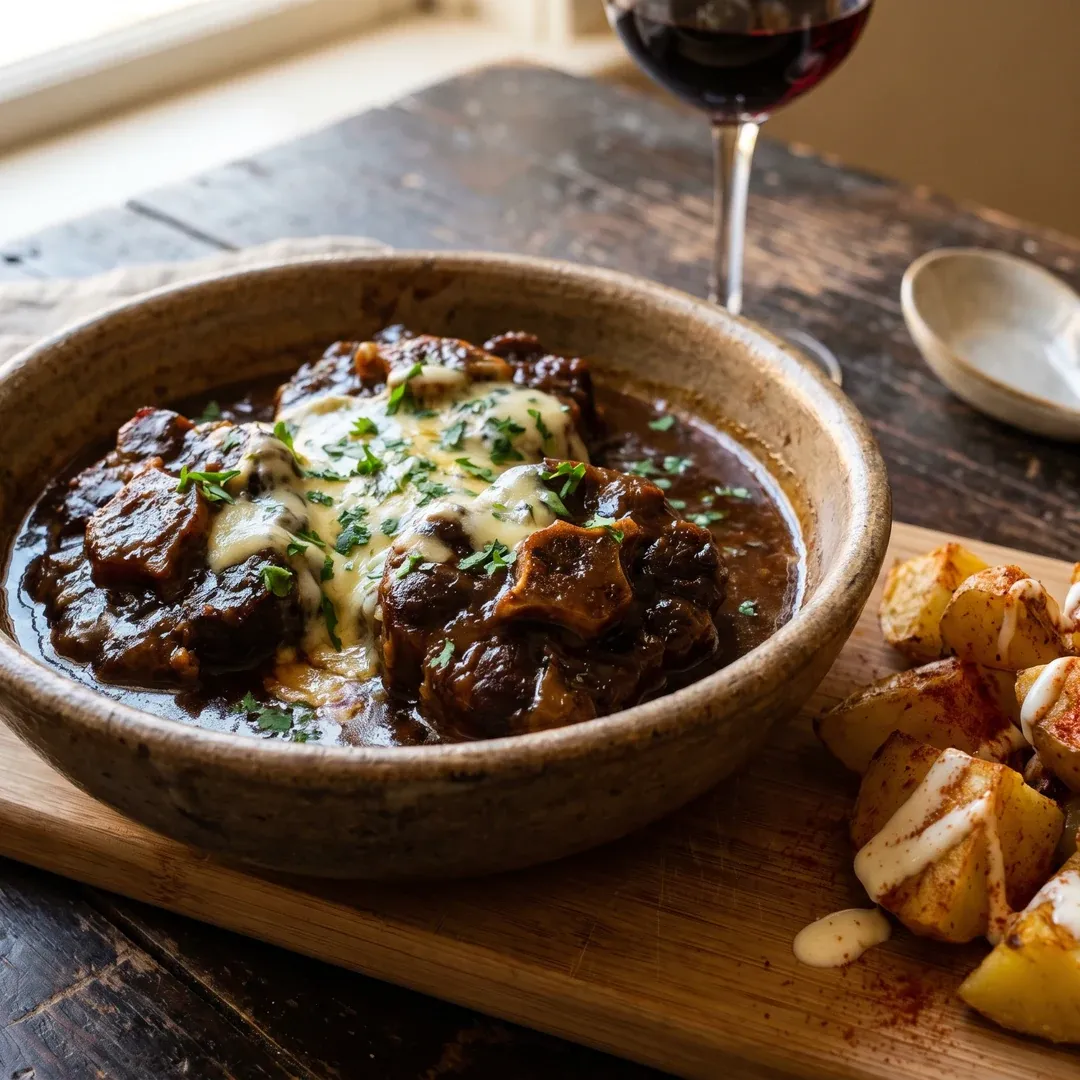
- Oxtail with Cabrales and patatas bravas
- Crema Catalana with toasted almonds and preserved orange
DKK 1,375 excl. VAT
Drinks included

A Little Spanish Affair…
- Flambéed squid in tomato sauce
- Oxtail with Cabrales and patatas bravas
- Crema catalana with plums baked in sherry
DKK 1,050 excl. VAT
Drinks included