Acidity, heat, fermentation and plenty of movement in the kitchen
An Asian cooking class at Kromans is for groups who want to prepare a menu with power, balance and clear influences from Thailand and Korea in particular. Tom yum gung meets Korean galbi, speed-fermented kimchi, beef fillet, pak choi, green asparagus, watercress, coconut, papaya and cardamom.
It suits companies, teams and private groups who want to cook together in Copenhagen with acidity, heat, grilling, fermentation and freshness all in play. Asian food is not one cuisine, and we do not pretend otherwise. This is about flavour, balance and a little speed around the wok — even when the wok is not the main character.
Great Asian Food and “hygge”
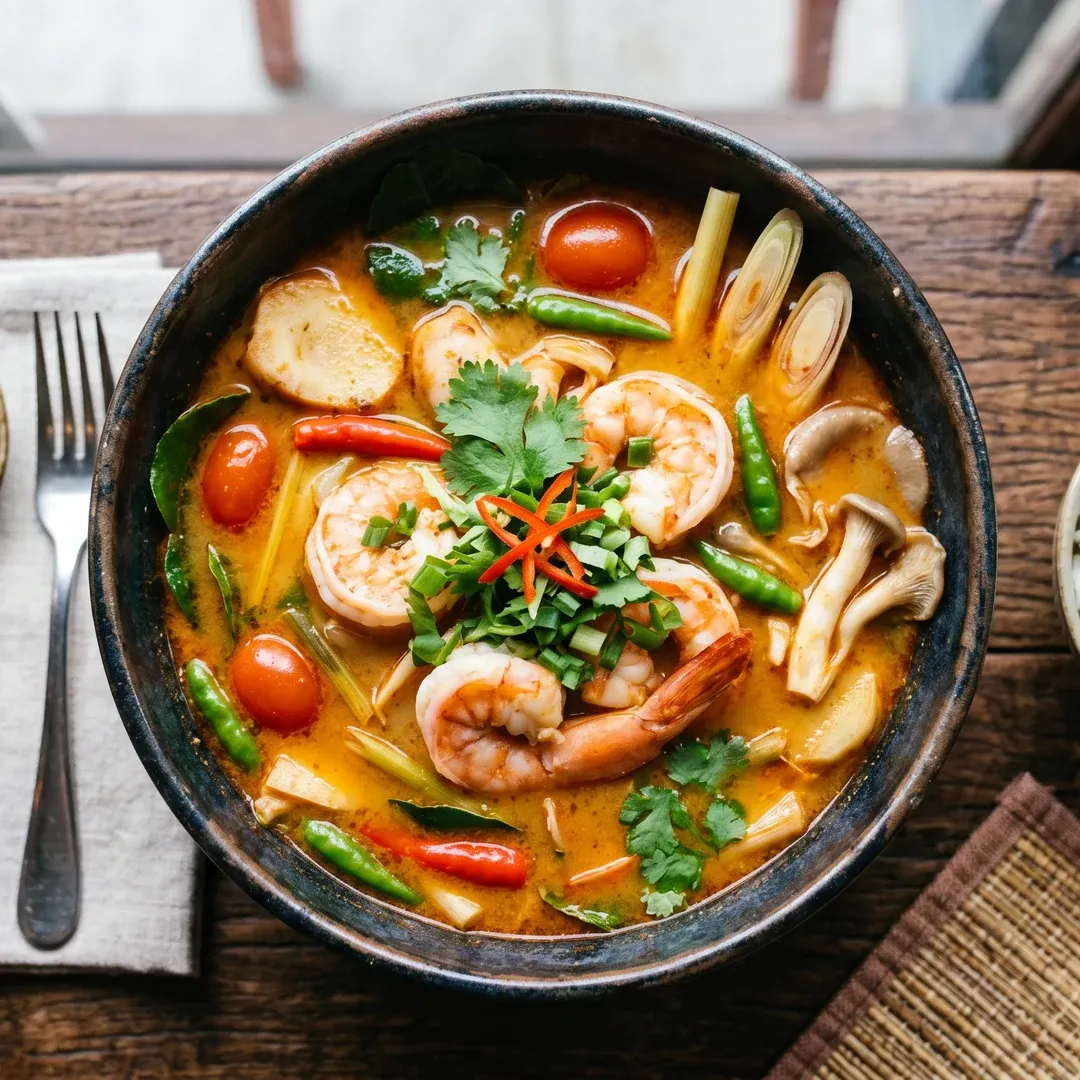
- Tom yum goong
- Korean galbi of veal ribs with quick-fermented kimchi
- Marinated fillet of beef with pak choi, green asparagus and watercress
- Coconut-baked bananas with papaya and cardamom parfait
DKK 1,425 excl. VAT
Drinks included