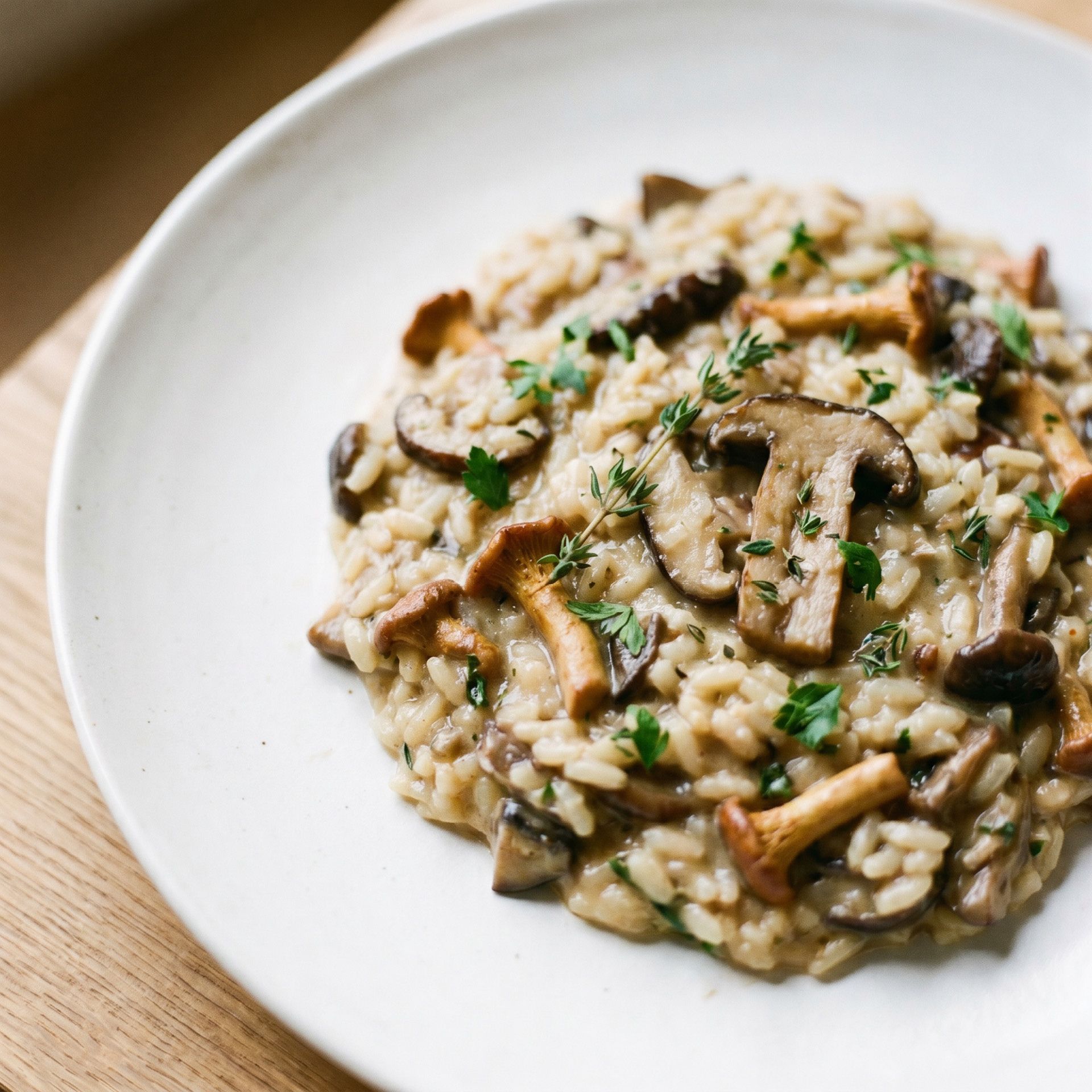
When Italy is not only about pasta, but also rice, maize and butter in the pan
Italian food is often reduced to pasta, tomato and pizza. In northern Italy, risotto and polenta play a larger role in many places than our pasta-dominated image suggests. Here you find rice, maize, mushrooms, butter, cheese, braised meat and sauces that are allowed to be soft, deep and slow.
At Kromans, this northern Italian thread appears in several menus: mushroom risotto; risotto with celery, morels and porcini; osso buco with soft polenta, Gorgonzola and gremolata; and wild boar ragù with polenta and Taggiasca olives. It is food that does not make noise for the sake of it. It comes together in the pan, on the plate and around the table.