Homemade pasta: why texture, bite and sauce must work together


Pasta with bite, sauce with purpose and a little less random boiling

Homemade pasta only becomes truly good when texture, bite and sauce work together. It is not simply a question of rolling a dough thinly. It is about understanding why some pasta shapes need to carry a rich ragù, while others are happiest with a lighter sauce of butter, lemon, herbs or seafood.

At Kromans in Copenhagen, pasta appears across several Italian menus as fettuccine, pappardelle, ravioli and agnolotti. Pasta is a craft in which you quickly discover that flavour does not come from merely ‘cooking something through’, but from tasting, adjusting and making the sauce cling exactly as it should.
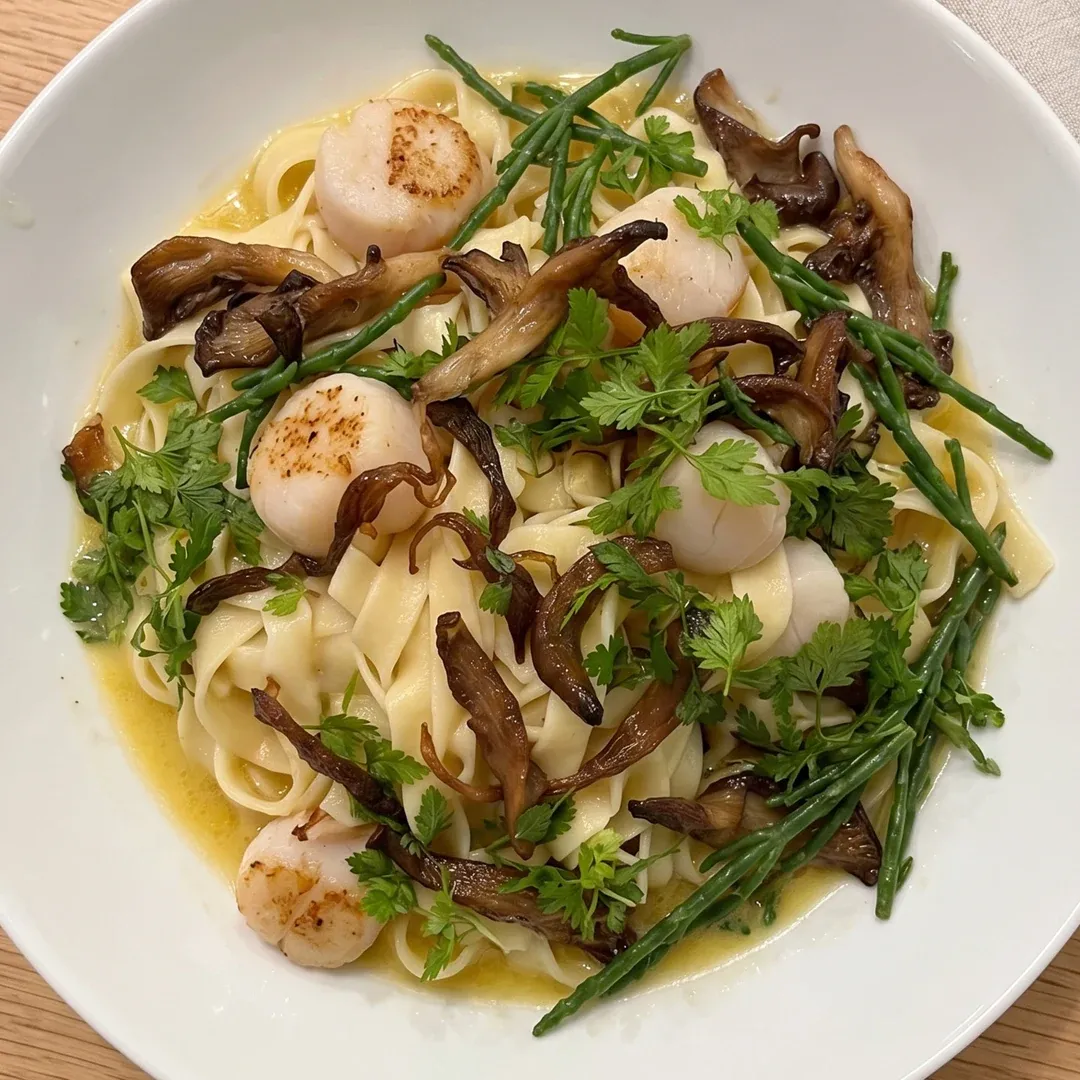

Creamy pasta with seared scallops, sautéed mushrooms, asparagus, and fresh parsley.

Contents

Why good pasta begins with texture

The texture of pasta is not a minor detail to consider at the end. It is the foundation. Good pasta needs a consistency that suits the sauce and the dish. Thin, delicate pasta works best with lighter sauces that will not overwhelm it. Wider or more robust shapes can carry deeper, richer flavours. That is why pappardelle makes sense with wild boar ragù: the broad pasta has enough surface to take on the depth of the sauce. Agnolotti with truffle, salsiccia and sage butter needs a different kind of attention, as the filling, dough and surrounding butter must work together without becoming heavy. Ravioli with scampi and prawn bisque moves in another direction again, where the pasta must hold its filling while still allowing the seafood to come through. When pasta succeeds, it is neither limp nor raw. It has resistance. It has bite. It answers back when you chew. That may sound rather dramatic for something that is essentially flour, eggs and work. But that is cooking: the small things matter most once you can taste the difference.


Pay particular attention to…

  • Bite and consistency suited to the dish
  • Pasta shapes with different forms, surfaces and purposes
  • Sauce that clings to the pasta instead of sitting beside it
  • Tasting as you cook, not only before serving
  • A craft in which the hands learn as much as the head

Sauce and pasta must do more than meet — they must hold together

One of the most common pasta mistakes is to think of sauce and pasta as two separate things. First you boil the pasta. Then you pour sauce over it. Done. Sadly, it is often rather dull as well. In Italian cooking, the point is for pasta and sauce to come together. The sauce should not drown the pasta; it should cling to it, wrap around it and bring flavour to every mouthful. That requires pasta that has not been cooked to death and a sauce with the right consistency. Some sauces need a little starchy pasta water to emulsify. Others need richness from butter, cheese or olive oil. Others again need lifting with lemon, herbs or the acidity of tomato. This is where tasting matters. Not as a polite little spoonful, but as an active part of cooking. Does it need salt? Is the sauce too rich? Should the lemon come forward? Is the pasta ready to move into the pan and finish cooking with the sauce? It is not an exam. It is simply the kitchen’s way of saying: wake up, something is happening here. As one of Kromans’ house lines puts it: ‘Life is too short for Dolmio — make your own tomato sauce!’ It is not about being fancy. It is about sauce as flavour, choice and craft. And yes, sometimes a small protest against jars of red sleep.


In short: 5 things you need to know…

  • The shape of the pasta influences which sauce suits it.
  • Bite matters because pasta is often finished together with the sauce.
  • A good sauce needs adjusting, not simply reheating.
  • Richness, acidity, salt and herbs decide whether the dish feels alive.
  • Tasting as you cook is the difference between ‘good enough’ and ‘yes please, more’.

Read more about the Italian kitchen

Explore all the Italian food experiences at Kromans Cooking School in Copenhagen.

An article about rice, polenta, mushrooms, butter, cheese and the creamier side of Italian gastronomy that several of Kromans’ menus draw upon.

An article about the small touches that bring Italian dishes to life: lemon, basil, gremolata, sage, tomato, olive oil and that final taste before serving.

FAQs

What makes homemade pasta good?

Homemade pasta is good when the dough, thickness, cooking and sauce suit one another. The pasta needs a texture that carries the dish and provides resistance in the mouth. It is not only about fresh pasta, but about making consistency, filling, sauce and flavour work as one dish.

Why is bite important in pasta?

Bite matters because pasta needs to hold its shape and come together with the sauce without becoming soft and limp. When the pasta offers resistance, the dish feels more alive and the sauce can settle around it more effectively.

How do you choose a sauce for pasta?

The sauce should suit the shape and strength of the pasta. Broad pasta can carry richer sauces, while finer pasta often works best with lighter ones. It is not a rigid rulebook, but a practical way to think about balance.

Does homemade pasta always have to be fresh?

No. Good pasta is not only about freshness, but about purpose. Fresh pasta is ideal for filled shapes and soft sauces, while dried pasta often provides more bite. The important thing is that the texture suits the sauce and the dish you want to make.

Would you like to experience the Italian kitchen together?

See our Italian cooking classes, or contact us and we will help you find the right class and menu.