Crispness, acidity and creaminess: balance in vegan cooking


When green cooking gains crunch, edge and cohesion

Crispness, acidity and creaminess are central tools in vegan cooking. This article explains how texture and seasoning can lift plant-based dishes from good intentions to genuine flavour. When they work together, vegetables, pulses, nuts and green sauces gain clearer direction and each mouthful becomes more distinct.

At Kromans in Copenhagen, the subject matters because vegan food should not feel like a compromise. It needs crunch, freshness, richness and enough flavour that the vegetables do not stand looking at the floor. Participants taste their way forward and use contrasts deliberately, creating food that feels lively, coherent and generous around the shared table.
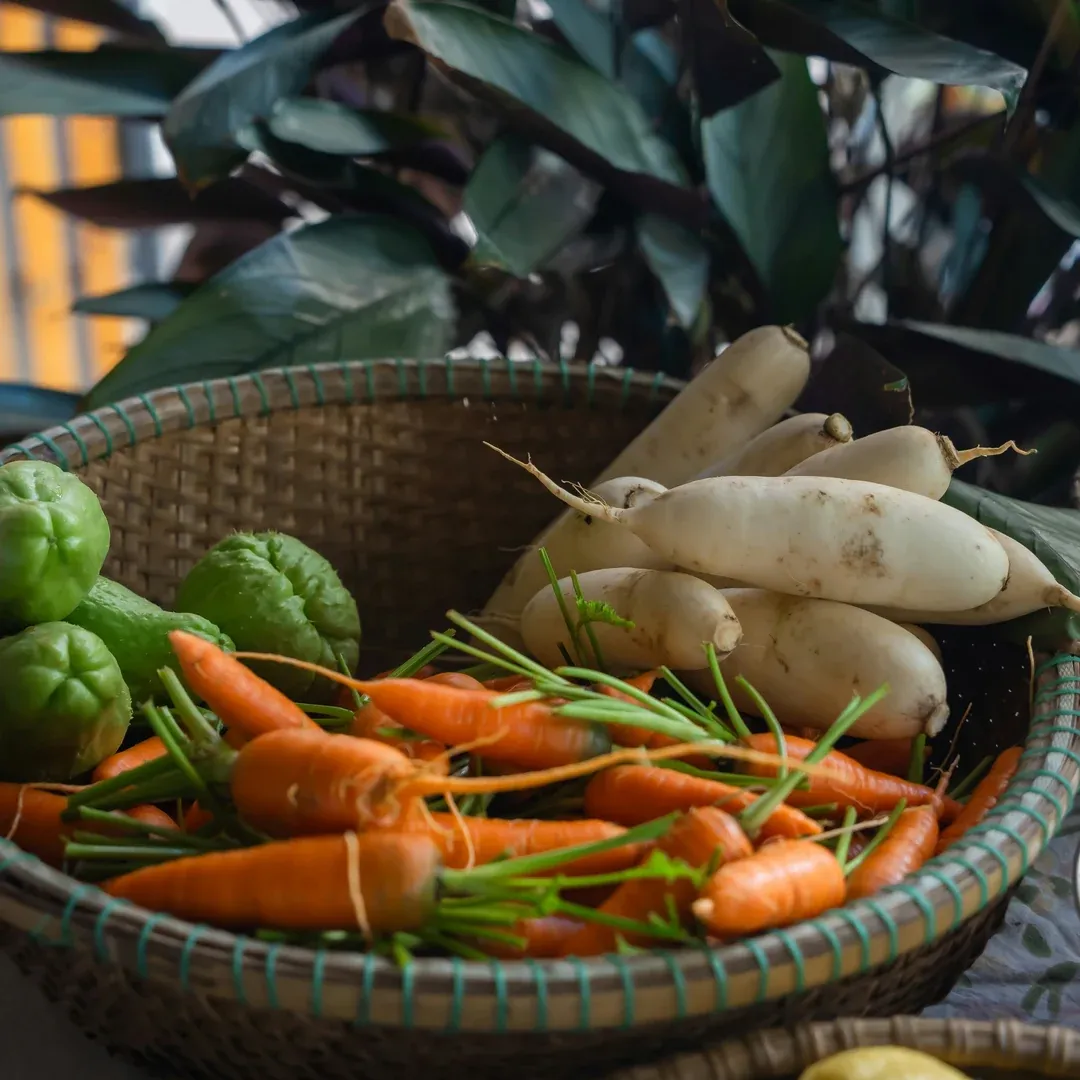

Basket of fresh vegetables with orange carrots, white daikon radishes, and green vegetables in a woven basket outdoors.

Contents

Why balance is essential in vegan food

Vegan cooking often requires extra attention to texture and seasoning. Without animal fats, cheese, eggs and butter, the dish needs other tools: avocado, nuts, oil, coconut, beans, lentils, herbs, acidity, roasting and crispness.

The NHS describes a vegan diet as plant-based, including vegetables, grains, nuts, fruit and plant-based foods without animal products such as dairy and eggs. Gastronomically, that does not make the food less interesting. It simply means flavour and mouthfeel must be built in other ways.

Crispness provides energy, whether from crisp flakes, chickpea flatbread, tortillas, toasted nuts, salted almonds or a burger bun with bite. Without it, plant-based food easily becomes too soft.

Acidity supplies freshness. Mango, pico de gallo, lime, rocket, salsa, fruit or vinegar can make the richness of avocado, coconut or nuts feel lighter. Acidity is the little kitchen friend whispering, ‘Shall we wake this dish up?’

Creaminess brings the dish together. Guacamole, basil emulsion, rocket pesto, coconut with lentils or avocado can provide cohesion. Yet creaminess without acidity and crispness quickly becomes heavy. This is where balance begins to matter.


Pay particular attention to…

  • Crispness makes vegan dishes more lively.
  • Acidity lifts richness and makes the dish fresher.
  • Creaminess binds the dish together but should not dominate.
  • Herbs and green sauces can provide both freshness and depth.
  • Texture is not decoration; it is part of flavour.

How to season vegan dishes

A vegan dish often needs adjusting on several levels. First, does it need salt? Next, does it need acidity? Then, is there enough richness, crunch and freshness? It sounds almost too simple, but this is where many green dishes either wake up or fall asleep wearing their aprons.

Kromans’ vegan theme provides several useful examples. Basil emulsion gives green richness and herbal freshness. Rocket pesto adds bitterness, depth and oil. Guacamole provides creaminess but needs lime, salt and perhaps chilli to avoid becoming flat. Mango salsa supplies sweetness and acidity, while pico de gallo brings freshness and juiciness.

A cauliflower symphony with crisp flakes, salted almonds and green oil shows how one ingredient can take on several expressions. Cauliflower may be mild, but roasting, crispness, salt and oil give it character. It should not simply be steamed and wished good luck.

At Kromans, you learn this with a spoon rather than lengthy slides. You taste guacamole before and after lime, notice how salted almonds change the mouthfeel and discover why a burger in a spinach bun needs richness, acidity and freshness to avoid becoming heavy.

The social setting improves the tasting. One person wants chilli, another acidity, while a third says it is right and should be left alone. Knowing when to adjust and when to stop interfering is an important skill too.


In short: 5 things you need to know…

  • Vegan food becomes stronger through contrast between crisp, creamy and fresh elements.
  • Acidity is essential for lifting avocado, coconut, nuts and oil.
  • Creamy elements need texture as a counterpoint.
  • Green sauces and pestos can provide both richness and herbal freshness.
  • Seasoning is the difference between merely plant-based and genuinely delicious.

Read more about vegan cooking

Explore all our vegan food experiences at Kromans Cooking School in Copenhagen.

An article about how plant-based ingredients can provide body, protein, texture and satisfaction in vegan dishes.

An article about building vegan dishes with substance, freshness, a good sear and the social pleasure of eating together.

FAQs

Why is crispness important in vegan food?

Crispness provides contrast and makes the dish more lively.

Without texture, plant-based food can quickly feel too soft or monotonous.

What does acidity do in vegan cooking?

Acidity lifts richness, highlights vegetables and makes the dish fresher.

Lime, lemon, salsa, mango or vinegar can provide the necessary edge.

How do you create creaminess without dairy?

Creaminess can come from avocado, coconut, nuts, beans, lentils, oil or plant-based emulsions.

The important thing is to balance creaminess with acidity and texture.

How do you season vegan food?

Taste for salt, acidity, richness, sweetness, bitterness and texture.

Small adjustments can make a great difference, particularly in plant-based dishes.

Would you like to experience vegan cooking together?

See our vegan cooking classes, or contact us and we will help you find the right class and menu.