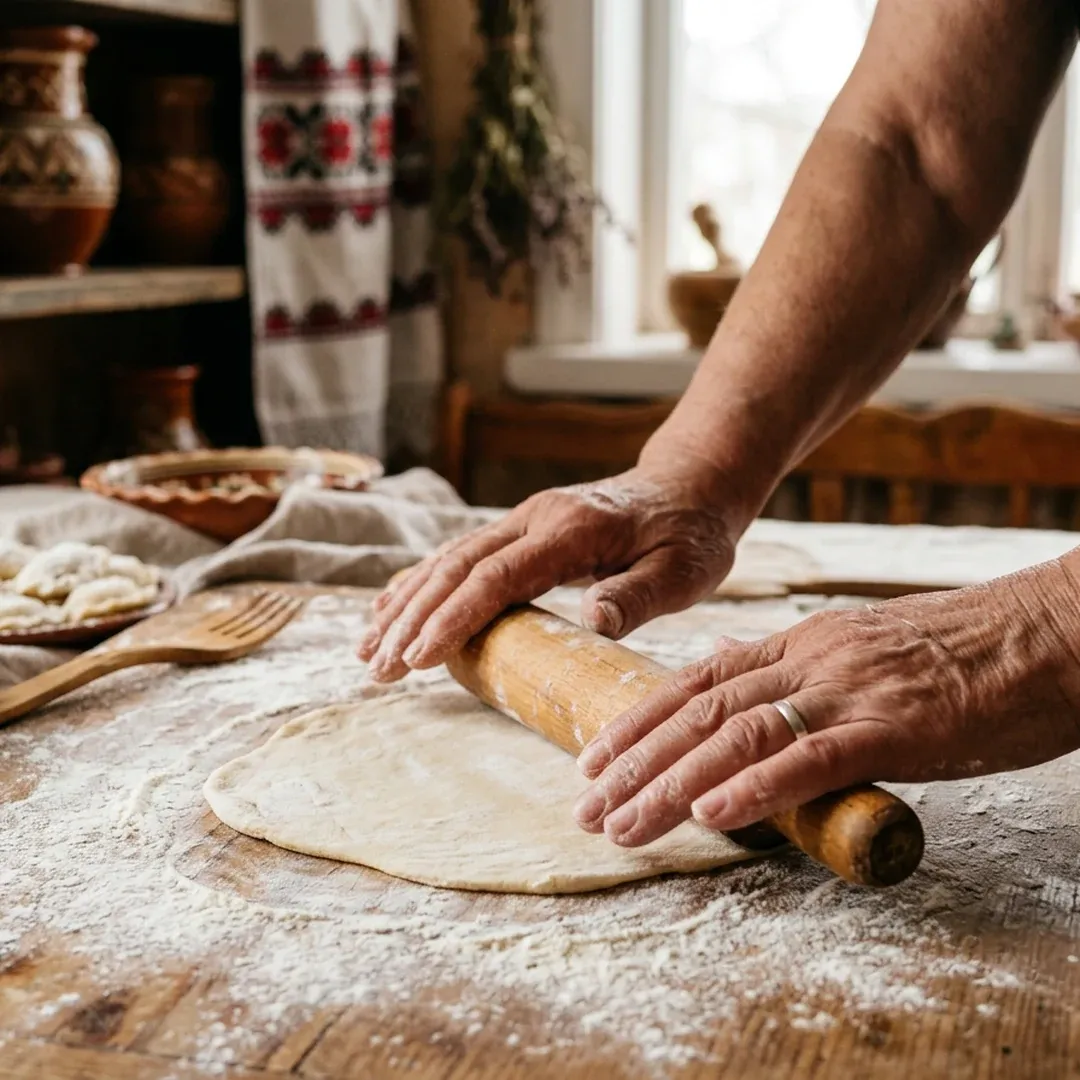
Varenyky suit group cooking because the work divides naturally. Somebody prepares the dough, somebody handles the mushrooms, others shape the dumplings, while another person watches the consommé and seasoning. The jobs differ but finish in the same dish, making collaboration visible on the plate.
The process also allows people to learn with their hands. You feel the dough drying, see whether the filling is too wet and quickly discover that an overfilled dumpling will not close. It is practical kitchen craft without a long lecture — and with every chance that the first varenyky will be more individual than perfect.
Working together does not make precision less important. When several people shape dumplings, the group needs a shared standard for size, filling and sealing so they cook at roughly the same rate. That means looking at each other’s work, adjusting and helping — a small exercise in quality control, only with flour on the table.
Tasting brings the jobs together. The mushrooms need depth, the consommé clarity and the finished varenyky a coherent flavour. That is where kitchen life arises at Kromans: people work, ask and taste while gradually developing a shared sense of when the dish is right.
Varenyky show that cooking together does not require a complicated dish. It needs clear techniques and decisions that several people can share. When everyone has contributed to dough, filling or serving, the meal is easier to gather around. The community is not only at the table; it is folded into the work.