Chicken Kyiv: crisp coat, soft centre and classic kitchen technique


When crispness, butter and succulence must arrive together

Chicken Kyiv is built on a striking contrast: crisp breadcrumbs outside and succulent chicken with a soft, buttery centre within. This article explains why the dish requires precision, timing and accompaniments with contrast if the coating is to remain crisp, the meat succulent and the butter stay where it is most useful.

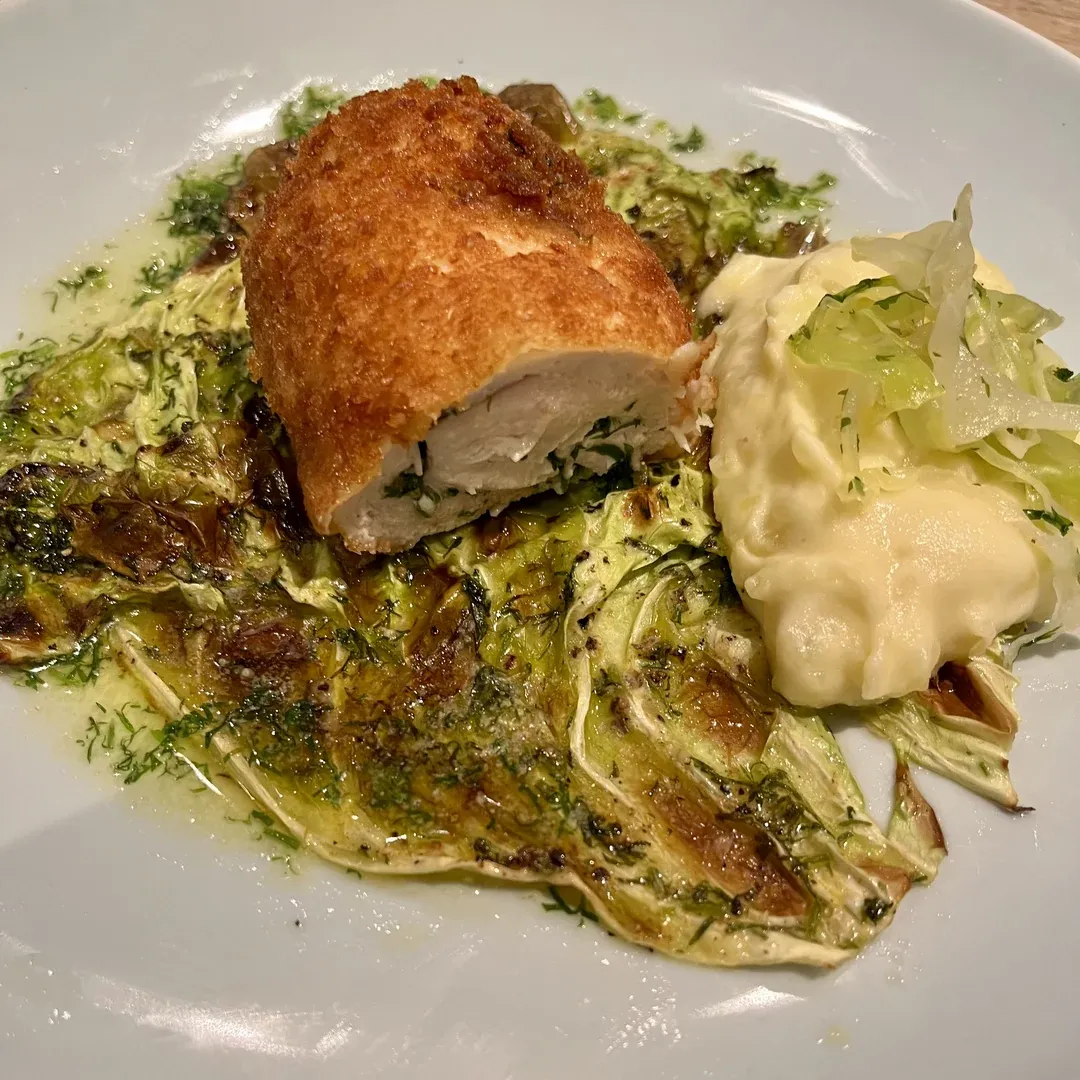
At Kromans in Copenhagen, Chicken Kyiv forms part of the Ukrainian cooking class alongside soft mashed potato and flame-glazed Savoy cabbage. It is generous, but balance decides whether the dish feels lively or merely heavy. Acidity, the cabbage’s structure and careful frying give the classic dish freshness, depth and a clear finish at the shared table.

Crispy breaded chicken breast perched on a bed of dill-infused creamed cabbage, with mashed potatoes and shredded cabbage on the side.

Contents

The technique behind Chicken Kyiv

Chicken Kyiv encloses a butter filling in chicken, then coats and cooks it so the outside becomes crisp while the meat remains succulent. It sounds simple, but the three layers have different demands. The breadcrumbs need colour and crunch, the chicken must cook without drying out, and the butter should provide a soft centre while remaining in the dish long enough to reach the plate.

Shaping is crucial. If the chicken does not close tightly around the butter, the filling quickly finds a way out. Gaps in the coating weaken its protection. If temperature or timing is wrong, the outside may be ready before the centre, or the chicken may dry while you wait for colour.

The coating is not decoration. It provides the first texture and also protects the meat. A successful coating adheres, colours evenly and resists as the knife cuts through. A loose or limp coating removes much of the character on which the dish depends.

The butter filling also needs flavour. Its purpose is not merely richness but to distribute aroma and succulence from within. It must therefore be properly seasoned before it is enclosed. Once the chicken is sealed and coated, there is little room for editing.

The dish requires calm rather than solemnity. At Kromans you are welcome to ask, feel and look once more before sealing the chicken. That is better than discovering a gap after the butter has chosen freedom. Classic technique is easier to understand when you can see exactly what each movement prevents or creates.


Pay particular attention to…

  • The chicken must close tightly around the butter filling.
  • The coating needs even coverage and firm adhesion.
  • Cooking must produce both a crisp surface and succulent meat.
  • Season the butter filling before sealing the dish.
  • Plan resting and serving so the soft centre is not lost on the way.

Balancing crispness, butter and accompaniments

Chicken Kyiv does not live on butter and crispness alone. Because its main elements are rich, the dish needs accompaniments that support and challenge them. Kromans serves it with soft mashed potato and flame-glazed Savoy cabbage, two elements with very different roles.

Mashed potato brings calm, warmth and a soft bridge to the chicken. Yet calm must not mean irrelevance. It needs proper seasoning and a generous texture without becoming dense. It gathers the butter from the chicken, but also increases the dish’s richness, so it needs a clear green counterpoint.

Savoy cabbage can provide structure, fresh bitterness and a lightly charred edge from the flame glaze. This matters because breadcrumbs, butter and potato all move in a round, soft direction. The cabbage should not be a green excuse at the side of the plate; it has real work to do for the balance.

Tasting the components together shows that balance does not mean everything tastes equally strong. Chicken Kyiv retains the leading role, mashed potato provides the foundation and cabbage cuts through with structure and edge. The dish works when every part knows why it is there.

This also makes Chicken Kyiv good for cooking together. Tasks divide between chicken, butter, coating, mash and cabbage, but the timing must come together at the end. It becomes a shared kitchen project at Kromans in which one good component cannot rescue four delayed ones. Good music gives good energy — but somebody still needs to watch the pan.


In short: 5 things you need to know…

  • Chicken Kyiv is built on the contrast between crisp coating and a soft butter centre.
  • Tight shaping and even coating help keep the filling inside.
  • The chicken must be cooked through while remaining succulent.
  • Mashed potato brings calm and substance, while Savoy cabbage provides structure and contrast.
  • The dish requires several components to be timed and tasted together.

Read more about Ukrainian cooking

Explore the menu and the opportunities to cook Ukrainian food together at Kromans.

An article about varenyky, fillings, dough, mushrooms, broth and why dumplings work so well for cooking together.

An article about the ingredients that give Ukrainian food warmth, depth, acidity and satisfying character.

FAQs

What defines Chicken Kyiv?

Chicken Kyiv is defined by crisp breadcrumbs, succulent chicken and a soft, buttery centre. Its character lies particularly in the contrast between outside and inside.

Why is the coating important?

The coating creates crunch and protects the chicken while cooking. It needs to cover evenly and adhere firmly.

What goes well with Chicken Kyiv?

Soft mashed potato provides calm and substance, while cabbage can add structure, bitterness and green contrast to butter and breadcrumbs.

Why is Chicken Kyiv good for cooking together?

The dish has clear tasks — chicken, butter filling, coating and accompaniments — which can be divided but must ultimately be timed and tasted as one whole.

Work with crispness, timing and flavour at Kromans

Would you like to tackle Chicken Kyiv and a Ukrainian menu in which everybody gets involved? See Kromans’ Ukrainian cooking class, or contact us about your event.