Mushrooms, cabbage, potatoes and soured cream in Ukrainian food


Earthy ingredients with warmth, depth and contrast

Mushrooms, cabbage, potatoes and soured cream are prominent threads in Ukrainian cooking. This article explains how they contribute depth, structure, substance and acidity respectively — and why they work best when allowed different roles rather than ending as the same soft, heavy flavour.

At Kromans in Copenhagen, these threads meet in the Ukrainian menu: aubergine with soured cream, varenyky with mushrooms, Chicken Kyiv with mashed potato and flame-glazed Savoy cabbage. It is earthy without becoming monotonous. Cooking, texture and seasoning create variation so each ingredient retains its character while supporting the menu as a whole.

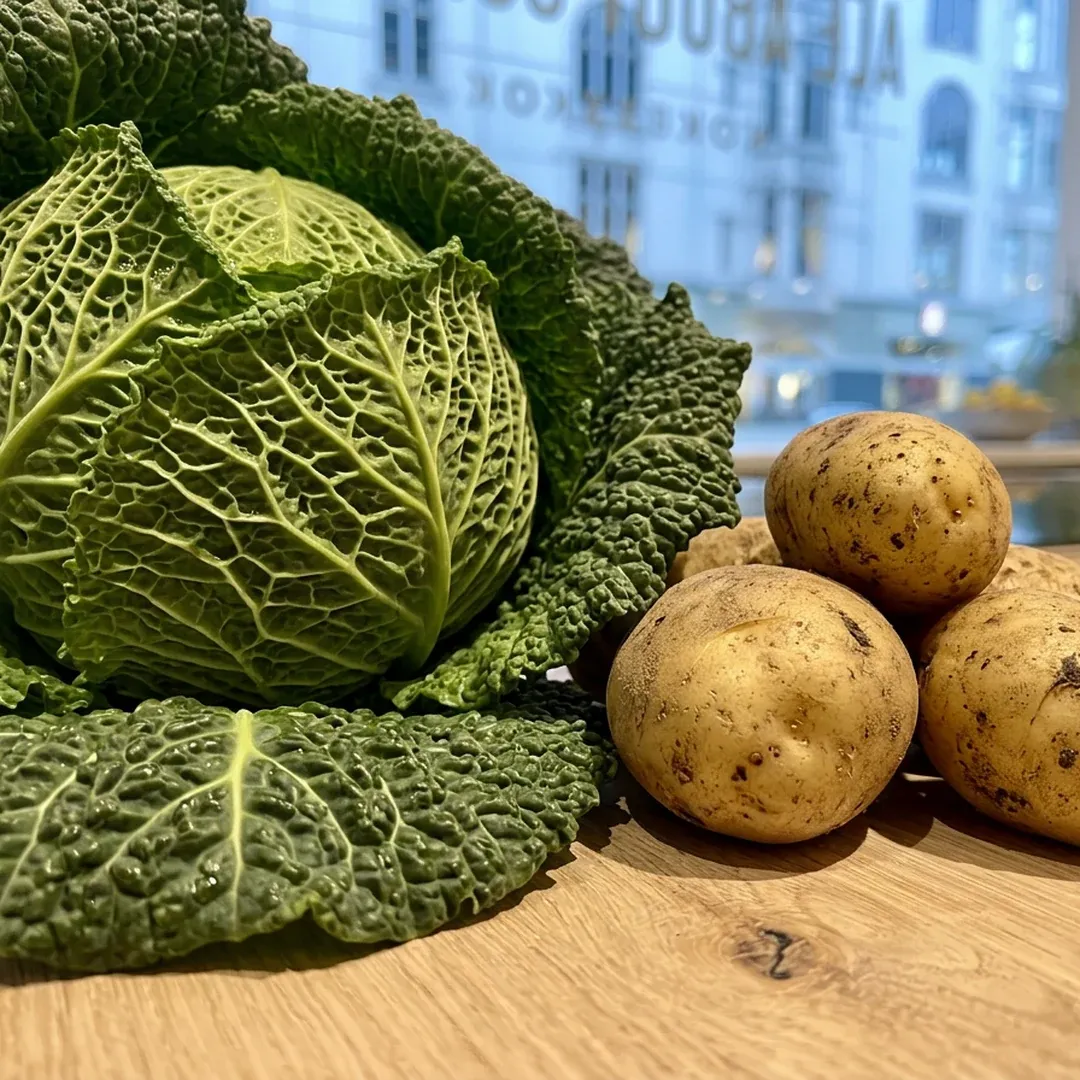
Savoy cabbage with crinkled leaves and several russet potatoes on a wooden table.

Contents

Four ingredients — four functions

Mushrooms, cabbage, potatoes and soured cream are easily grouped as ‘earthy ingredients’, but they do not perform the same job. Their strength lies in their differences. Mushrooms bring dark depth and umami, cabbage structure, freshness and bitterness, potatoes calm and satisfaction, while soured cream binds with richness and lifts with acidity.

Mushrooms require heat and attention. Their moisture needs managing if the flavour is to concentrate. Kromans’ Ukrainian menu uses them both as a sauté in varenyky and in mushroom consommé, revealing two sides of the same ingredient: full, fried character and clearer aromatic depth in a liquid.

Cabbage can be more than something boiled until soft. Flame-glazed Savoy cabbage retains structure while gaining sweetness, bitterness and a lightly charred edge. With Chicken Kyiv this matters because the cabbage can stand against butter and breadcrumbs. It should not merely fill a green space on the plate.

Potato works more quietly. As soft mash it provides substance and a calm foundation beneath a stronger central component. Precisely because it is mild and soft, however, it needs seasoning. Otherwise it becomes a neutral interval rather than part of the dish.

Soured cream has a double function. It adds richness as well as fresh acidity. With aubergine caviar on rye-bread croutons, it can counter the aubergine’s soft, lightly smoky character. ‘A little little, a little delicious and a little smoky…’ works only when the smoke also has something acidic and fresh to play against.


Pay particular attention to…

  • Give mushrooms enough heat to develop flavour and release excess moisture.
  • Cabbage should retain character rather than automatically being cooked completely soft.
  • Mashed potato needs seasoning even though its role is calm and rounded.
  • Soured cream provides richness and acidity; use both deliberately.
  • The ingredients need different functions if the dish is to feel alive.

How the ingredients create balance

Balance does not come from making every flavour equally strong. It appears when each component performs a job. Across Kromans’ Ukrainian menu, soured cream lifts aubergine, mushrooms bring depth to varenyky, mash receives the richness of Chicken Kyiv and Savoy cabbage adds structure and edge.

The ingredients therefore need tasting together rather than only separately. Mash may taste good alone yet be too rounded beside butter-filled chicken. Savoy cabbage may seem assertive alone but be exactly what the whole requires. Soured cream may be rich, but its acidity makes a soft vegetable dish easier to eat.

Temperature and texture form part of the balance. Warm, soft mash and crisp breadcrumbs feel different even before salt and acidity enter the conversation. Cabbage bite breaks the softness. Clear consommé around filled varenyky creates a different lightness from a heavy sauce. Flavour is not only on the tongue; resistance, warmth and consistency matter too.

This is why simple ingredients can be professionally interesting in a shared kitchen. Participants see and taste what happens when mushrooms receive more heat, cabbage retains bite or a little acidity transforms a cream or vegetable dish. At Kromans the ingredients are not a lecture on Ukrainian gastronomy. They are something people hold and adjust together.

When it works, the food is warm and generous without falling flat. Mushrooms and potatoes provide the foundation, cabbage and acidity provide movement, and soured cream binds and lifts. That is the difference between a dish that merely fills you and one that keeps you taking another bite to understand why it works.


In short: 5 things you need to know…

  • Mushrooms contribute concentrated depth and umami.
  • Cabbage can provide structure, bitterness and green contrast.
  • Potatoes create calm, substance and satisfaction.
  • Soured cream contributes both richness and fresh acidity.
  • Balance appears when ingredients perform different jobs in the same meal.

Read more about Ukrainian cooking

Explore the menu and the opportunities to cook Ukrainian food together at Kromans.

An article about varenyky, fillings, dough, mushrooms, broth and why dumplings work so well for cooking together.

An article about Chicken Kyiv and how crispness, butter, chicken and accompaniments need to be balanced.

FAQs

What do mushrooms contribute to Ukrainian cooking?

Mushrooms can bring depth, umami and a substantial base flavour. They work as filling, sauté or flavour in broth and consommé.

Why does cabbage suit dishes with butter and potato?

Cabbage can add structure, bitterness and green contrast to components that are otherwise soft, round and rich.

What does soured cream do in a dish?

Soured cream contributes both richness and fresh acidity. It can bind a dish while lifting earthy or smoky flavours.

Is Ukrainian food always heavy?

Ukrainian dishes can be warm and satisfying without feeling heavy. Cabbage, acidity, varied textures and deliberate seasoning create balance.

Experience Ukrainian flavours in the Kromans kitchen

Would you like to work with mushrooms, cabbage, potatoes, soured cream and the techniques that help earthy ingredients lift one another? See the Ukrainian cooking class, or contact us about your event.