Sauce, service and the dining table: the formal side of Downton Abbey food


When the details on the plate set the tone

The formal Downton Abbey direction is not simply about pretty plates. It is about how sauce, cooking, ingredients and service make a dinner feel coherent. This article looks at the small decisions behind oysters, soup, fillet mignon and dessert.

At Kromans in Copenhagen, it is practical cooking, not a museum display. You cook, taste and adjust together, so that an elegant menu becomes real food rather than a prop.
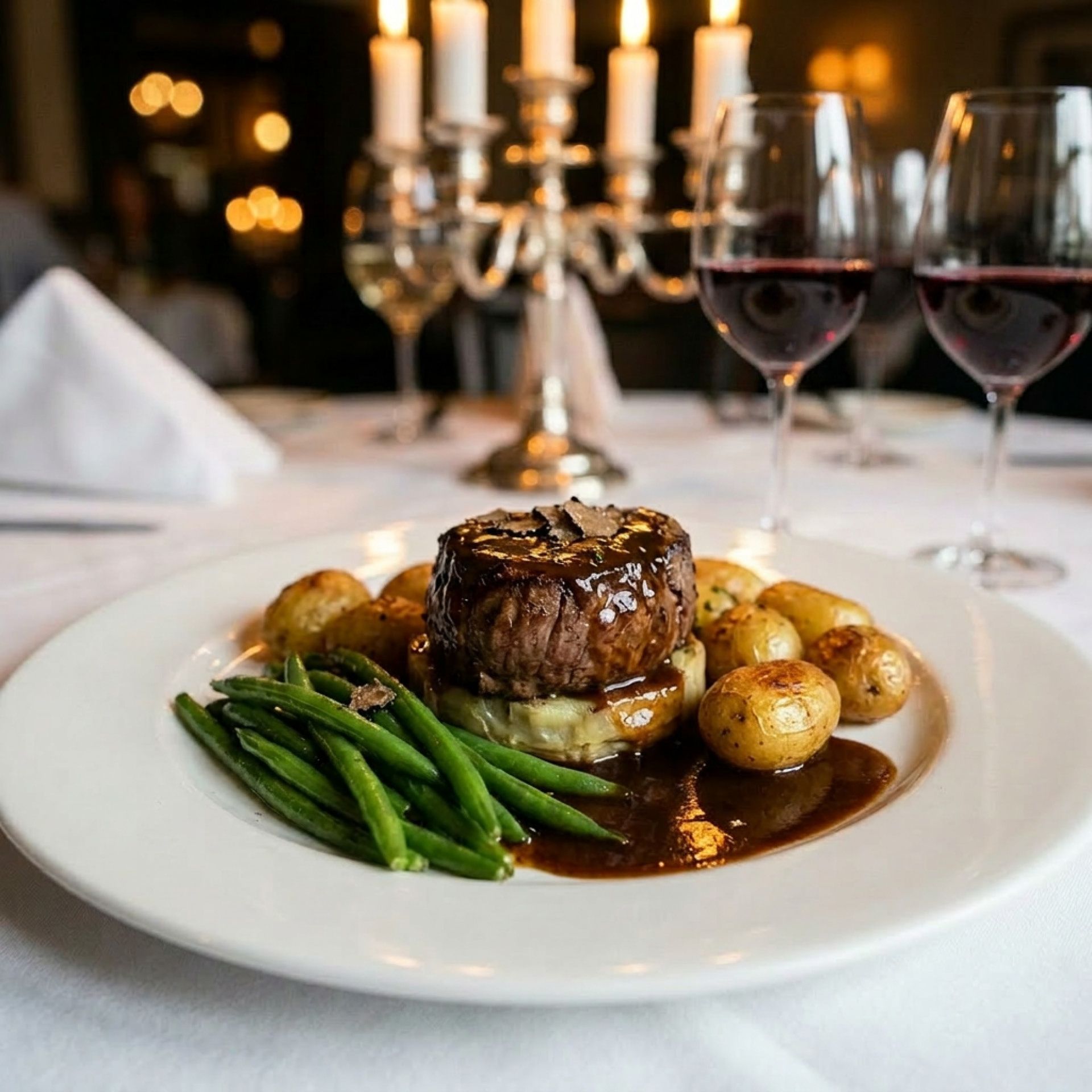
Plate of steak with potatoes and green beans in a glossy sauce, candlelit dining in the background

Contents

Why sauce and service matter

A sociable dinner does not become formal because it has a French name. It becomes formal when ingredients and technique work together. Gratinated oysters require the salty sea flavour to meet a white-wine cream with enough acidity and richness to lift rather than cover. Cayenne and Parmesan need to provide direction, not take over.

Fillet mignon with artichoke, green beans, pommes Château and truffle demi-glace has another task. The meat needs to be tender, the garnish must bring its own texture and the sauce must gather the plate. If it becomes too heavy, the dish loses lift. If it is too thin, it loses its purpose.


Pay particular attention to…

  • Oysters need balance between salt, acidity and richness.
  • Soup should be fresh and coherent, not merely creamy.
  • Fillet mignon needs precise heat.
  • Demi-glace should gather a dish without weighing it down.
  • Garnish should bring both colour and texture.

Precision without stiffness

Precision in a kitchen is not the same as solemnity. It is knowing when soup is round enough, when green beans still have bite and when a sauce needs salt, acidity or a little more calm. These small decisions are exactly what make a menu interesting to cook together.

The Downton Abbey direction suits groups because there are many roles. Someone works with oysters, someone watches the pan, someone tastes the sauce and someone notices the potatoes are ready before everyone else. It is collaboration with more butter and fewer slides.


In short: 5 things you need to know…

  • Elegant food is still craft.
  • Tasting as you work decides the balance.
  • Service gives a menu common direction.
  • Several people can work on different parts of one menu.
  • Precision becomes easier when everyone can taste and talk.

Read more about Downton Abbey food

Explore all Downton Abbey food experiences at Kromans Cooking School in Copenhagen.

An article about how the family table and the working kitchen create two different food stories in the Downton Abbey universe.

An article about the rustic side of British food culture, where warmth, substance and kitchen craft matter more than fine appearances.

FAQs

What makes a menu sociable?

It is the interaction of ingredients, technique, sauce, service and tempo.

It is not about making food stiff, but about giving it clarity.

Why is sauce important?

Sauce can bring flavours together and give direction to the plate.

It should lift the ingredients rather than conceal them.

Can beginners take part?

Yes. The chef guides the work with heat, seasoning and timing.

You learn by working with the details together.

Would you like to experience the Downton Abbey kitchen together?

See our Downton Abbey cooking classes, or contact us and we will help you find the right class and menu.