How to build texture in vegetarian cooking


Crisp, soft, creamy — with enough bite to wake the dish

Texture is essential in vegetarian cooking. This article explains how crispness, purée, a good sear, pickled elements, nuts and bite can make green dishes more lively and satisfying. Contrasts bring energy and mouthfeel while allowing each ingredient to be experienced more clearly.

At Kromans in Copenhagen, texture matters because vegetarian food must not become softness upon softness with a hope of parsley at the end. Green cooking should crunch, lift and answer back. In the kitchen, participants work practically with heat, cooking and seasoning, and experience how soft elements gain direction when they meet bite, crunch and freshness.

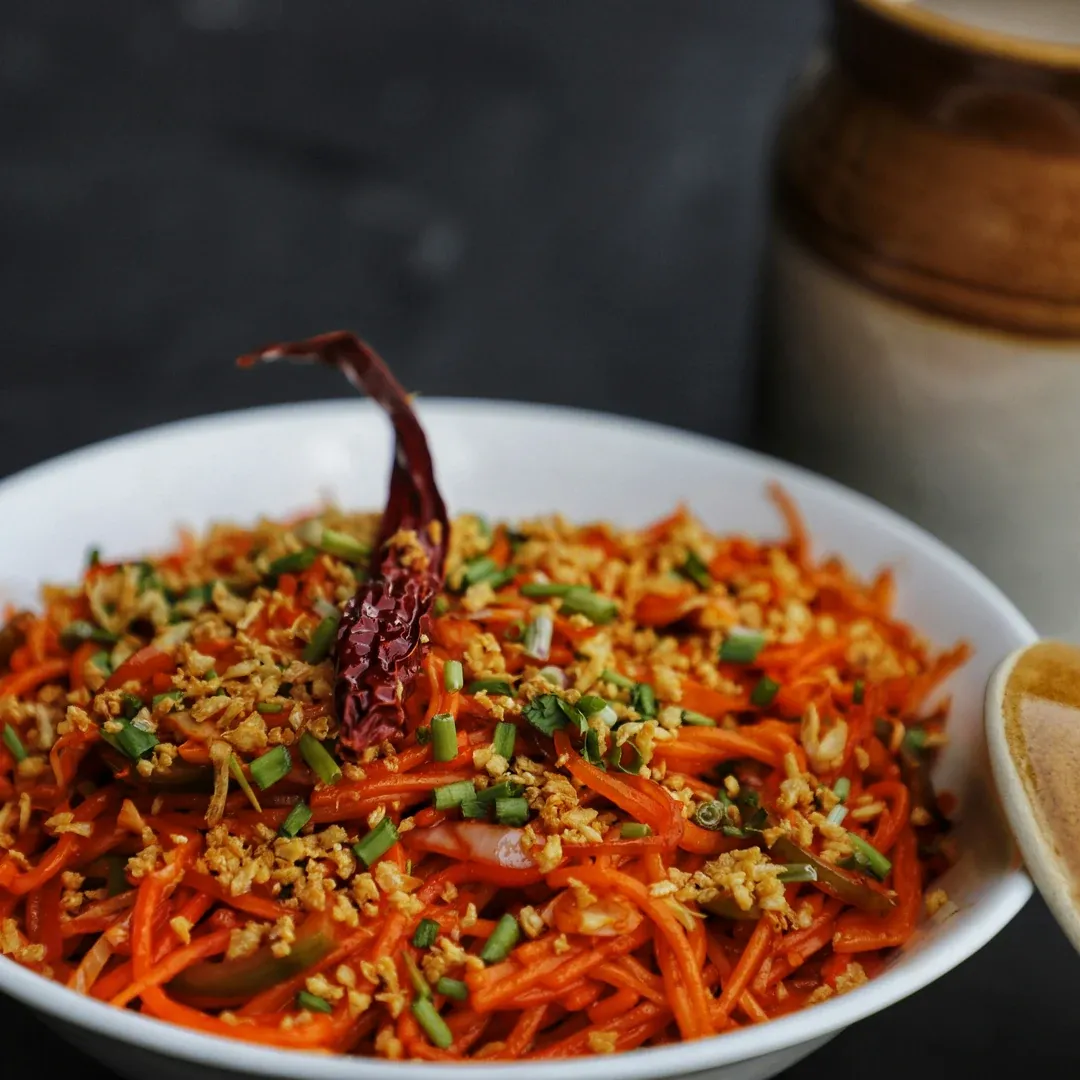
Bowl of orange noodles topped with crushed peanuts, scallions, and a dried red chili pepper centerpiece, garnished for a spicy dish.

Contents

Why texture matters so much in vegetarian food

Vegetarian food can have abundant flavour, but without texture it quickly loses energy. If everything is purée, cream or soft vegetables, the dish becomes heavy and monotonous. If everything is crisp, it lacks cohesion. A good vegetarian dish works with contrasts.

Smag for Livet describes the five basic tastes as sweet, sour, salty, bitter and umami. Yet taste in the mouth is more than these basic tastes. Mouthfeel, crispness, juiciness, creaminess and bite all affect how we experience a dish. This is particularly true of green cooking, where texture often needs to provide the weight otherwise associated with meat.

Kromans’ vegetarian theme contains texture in several forms. Crisp cabbage salad supplies snap. Fried cauliflower florets provide surface and bite; cauliflower purée brings softness. Black ravioli or agnolotti bring the structure of filled pasta. Nuts supply crunch and richness. Pickled green tomatoes add acidity and firmness. Almond cake and almond florentines show that texture also matters in dessert.

Texture is not decoration. It keeps the mouth interested. A dish can be correct in flavour yet still feel flat if everything has the same consistency. It is rather like an evening without music: technically possible, but why do that to yourself?


Pay particular attention to…

  • Crispness brings energy and contrast to green dishes.
  • Purée and cream need to be balanced with bite.
  • A good sear provides depth and more mouthfeel.
  • Pickled elements can provide both acidity and firm texture.
  • Nuts and flakes add crunch, but should be used with purpose.

How to build a green dish with several textures

A strong vegetarian dish can be built as a small composition of textures. Begin with a soft base: purée, potato chiffon, ricotta or creamy vegetables. Add something with bite: cabbage, chickpeas, beans, pasta or grilled vegetables. Then something crisp: nuts, flakes, a seared crust or a florentine. Finish with something fresh or pickled to cut through.

Cauliflower is a good example. Cauliflower purée brings softness, while fried florets give colour, an edge and bite. Purée alone makes the dish soft; florets alone leave it without cohesion. Together they provide greater depth.

Cabbage can do something similar. Raw or lightly cooked cabbage provides fresh crunch, while grilled or wrapped cabbage offers warmth and more depth. Cabbage is one of those ingredients that can travel from dreary canteen food to serious gastronomic player when treated properly. It merely needs a little affection and perhaps some heat in its cheeks.

At Kromans, texture is not theoretical. You feel it. You taste the difference between soft purée and a crisp flake, discover why pickled tomatoes can wake a dish, and notice how nuts provide body yet can become too much if they are not balanced by acidity.

Again, the social setting helps. With several people around the dish, the right questions come more readily: ‘Does it need crunch?’, ‘Is it too soft?’, ‘Should the tomato bring more acidity?’ This is the ordinary poetry of the kitchen. Not lofty. Simply necessary.


In short: 5 things you need to know…

  • Texture matters as much as flavour in vegetarian food.
  • A good green dish combines soft, crisp, juicy and firm elements.
  • Purée needs a counterpoint of bite or crunch.
  • Pickled ingredients bring both freshness and texture.
  • Vegetarian food becomes stronger when the mouth has something to work with.

Read more about vegetarian cooking

Explore all our vegetarian food experiences at Kromans Cooking School in Copenhagen.

An article about seaweed, tomatoes, mushrooms, nuts, cheese, brown butter and other techniques that can give vegetarian dishes greater depth.

An article about how acidity, pulses, richness and freshness can make vegetarian cooking taste more vivid.

FAQs

Why is texture important in vegetarian food?

Texture makes vegetarian dishes more lively and satisfying.

Crispness, bite, purée and acidity give the mouth more to experience.

How do you avoid soft vegetarian food?

Combine soft elements with crispness, a seared surface or pickled ingredients.

This gives the dish contrast and clearer direction.

Which ingredients give good texture?

Cabbage, nuts, chickpeas, cauliflower, pasta, pickled tomatoes and crisp flakes can all provide texture.

The important thing is to use each with a clear purpose.

Is texture merely decoration?

No. Texture is part of the experience of flavour.

It affects whether a dish feels fresh, heavy, lively or flat.

Would you like to experience vegetarian cooking together?

See our vegetarian cooking classes, or contact us and we will help you find the right class and menu.