How to achieve a seared crust while keeping rib of beef juicy


Make the heat work for you, not against you

A good crust and juicy rib of beef depend on heat, a dry surface, salt, timing and composure. This article explains why a good steak is not simply about fierce heat, but about control. The surface needs to be dry and the heat stable so the meat browns without losing its juices.

At Kromans in Copenhagen, this is central to Hard Rock & Rib of Beef, where rib of beef, lobster, home fries and béarnaise demand more than a healthy appetite. Rock ’n Roll will never die — but a steak can die twice if it is given too much heat. Participants learn how salting, contact with the pan, temperature and resting combine to produce a steak with both power and balance.

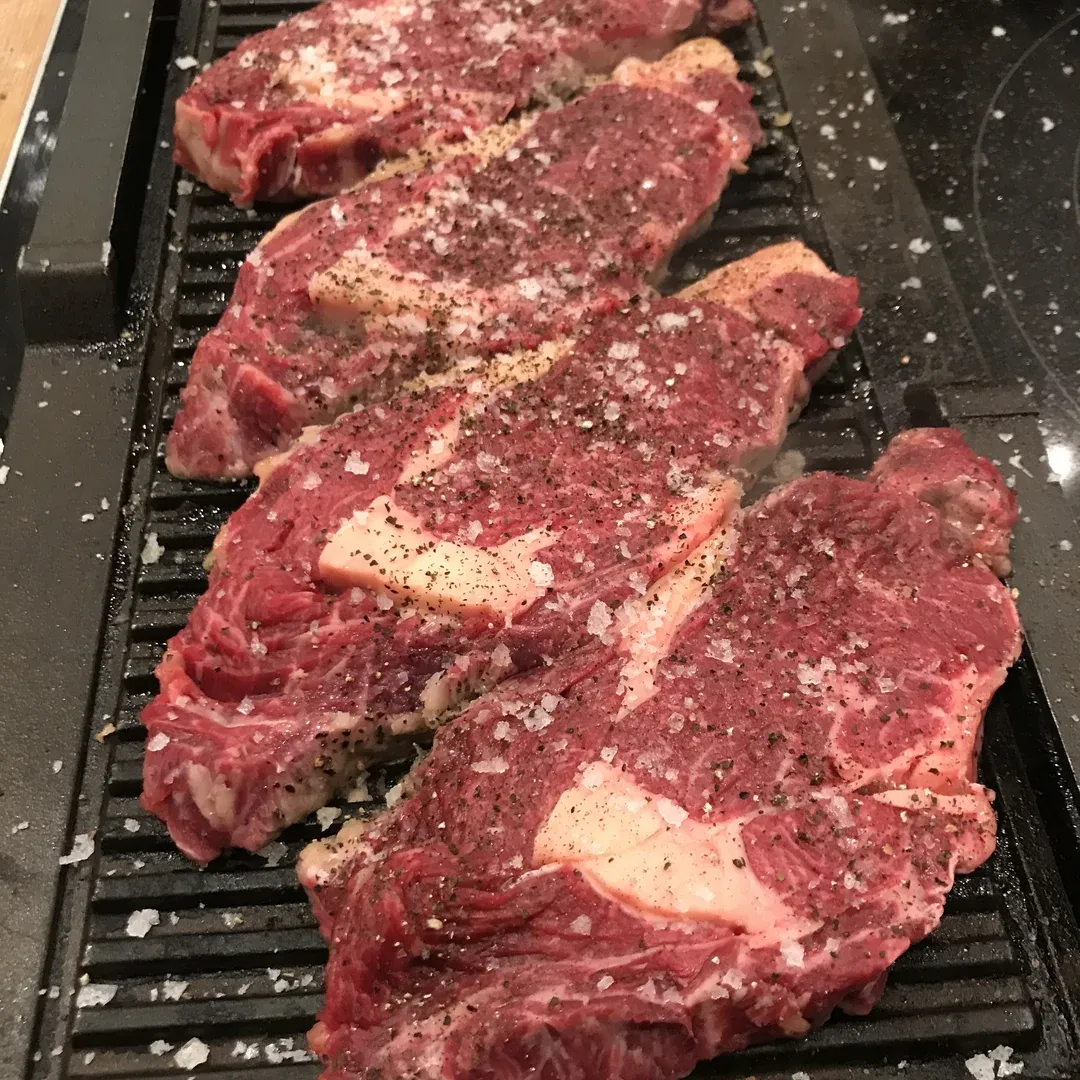
Raw ribeye steaks seasoned with salt and pepper on a grill pan.

Contents

What creates a good seared crust?

A good crust comes from browning, not luck. The meat needs contact with a hot pan or grill, its surface must be dry, and the heat needs to be high enough to brown rather than cook the meat in its own liquid.

The crust develops through Maillard reactions, as heat acts on proteins and sugars at the surface to create deep, roasted flavours. That is why a pale steak tastes flatter than one with a proper crust. It may be cooked, yes, but nobody brought the guitar.

The pan matters. Serious Eats stresses that cast iron needs to be preheated properly because it retains heat well but does not distribute it quickly. A pan heated evenly throughout gives more consistent browning and a better sear.

Juiciness is a matter of temperature control. For food safety, the USDA recommends cooking whole cuts of beef, veal, lamb and pork to at least 145°F and resting them for at least three minutes. In professional cooking, chefs work with a range of preferred degrees of doneness, but the principle is the same: use temperature and experience, not guesswork alone.

Resting and carryover matter too. The internal temperature often continues to rise after cooking. Ignore this and you miss the target. A steak that appears perfect in the pan can continue cooking beyond the desired point if the remaining heat is not taken into account.


Pay particular attention to…

  • The meat needs a dry surface before cooking.
  • The pan or grill must be hot enough to brown.
  • Salt brings out flavour, but timing and quantity matter.
  • Carryover can raise the temperature after cooking.
  • Juiciness is about control, not simply a shorter cooking time.

Rib of beef in practice: crust, resting and flavour

Rib of beef is a rewarding cut because it has flavour, marbling and enough substance to carry a classic steakhouse menu. That is precisely why it deserves proper treatment. The fat needs to render and add flavour. The surface needs to brown. The centre needs to remain juicy. It sounds simple — until somebody rushes it.

The first step is the surface. Pat the meat dry. Moisture creates steam, and steam does not create a crust. It mostly creates disappointment with a taste of beef. Next, the heat needs to be ready. A pan that is not hot enough turns the meat grey. Excessive, uncontrolled heat can burn the outside while leaving the middle raw. Both are culinary heavy metal without a rhythm section.

Salting and seasoning are part of the work too. Salt should enhance the flavour of the meat rather than make it aggressive. Béarnaise and home fries arrive later, but the meat needs to stand on its own. If the steak only tastes good while drowning in sauce, there is a problem. A yellow, tarragon-scented problem, but a problem nonetheless.

At Kromans, this offers excellent practical learning. You can see, hear and smell the difference between a steak that is browning and one that is steaming. You can feel how resting and heat change the result. With several people working together, it quickly becomes clear that good steak is not macho. It is precision with the volume turned up a little.

Hard Rock & Rib of Beef works because it is a substantial menu with a technical core. Lobster opens with the sea, rib of beef takes the stage and the accompaniments join in. The lead part still needs to be right. Otherwise it is just rock without bass.


In short: 5 things you need to know…

  • A seared crust requires a dry surface and high, stable heat.
  • Juiciness requires temperature control and attention to carryover.
  • Rib of beef has power and richness but can still be overcooked.
  • The meat should taste good on its own before the sauce is added.
  • Good steak is more about precision than confidence.

Read more about Hard Rock & Rib of Beef

Explore the Hard Rock & Rib of Beef cooking class at Kromans Cooking School in Copenhagen.

An article about why accompaniments are not decoration, but an essential part of balance in steakhouse food.

An article about the contrast between the salty taste of the sea, richness, seared crust and a powerful main course.

FAQs

How do you achieve a good crust on rib of beef?

Pat the meat dry and use high, stable heat.

The meat needs to brown rather than steam, which requires contact with a hot surface.

Why does steak become dry?

Steak often becomes dry because it receives too much heat or is not controlled by temperature.

Carryover after cooking can also take the meat further than expected.

Should rib of beef rest after cooking?

Yes. Resting or controlled temperature equalisation can improve the result.

The important point is to understand that the meat continues to change after it leaves the pan.

Is a seared crust important for flavour?

Yes. The crust brings depth, roasted aromas and greater intensity.

Without it, steak often tastes flatter and less interesting.

Would you like to experience Hard Rock & Rib of Beef together?

See our Hard Rock & Rib of Beef cooking class, or contact us and we will help you find the right evening.